


Networking Protocols Explained #cybersecurity #cybersecurityawareness #informationtechnology #informationsecurity
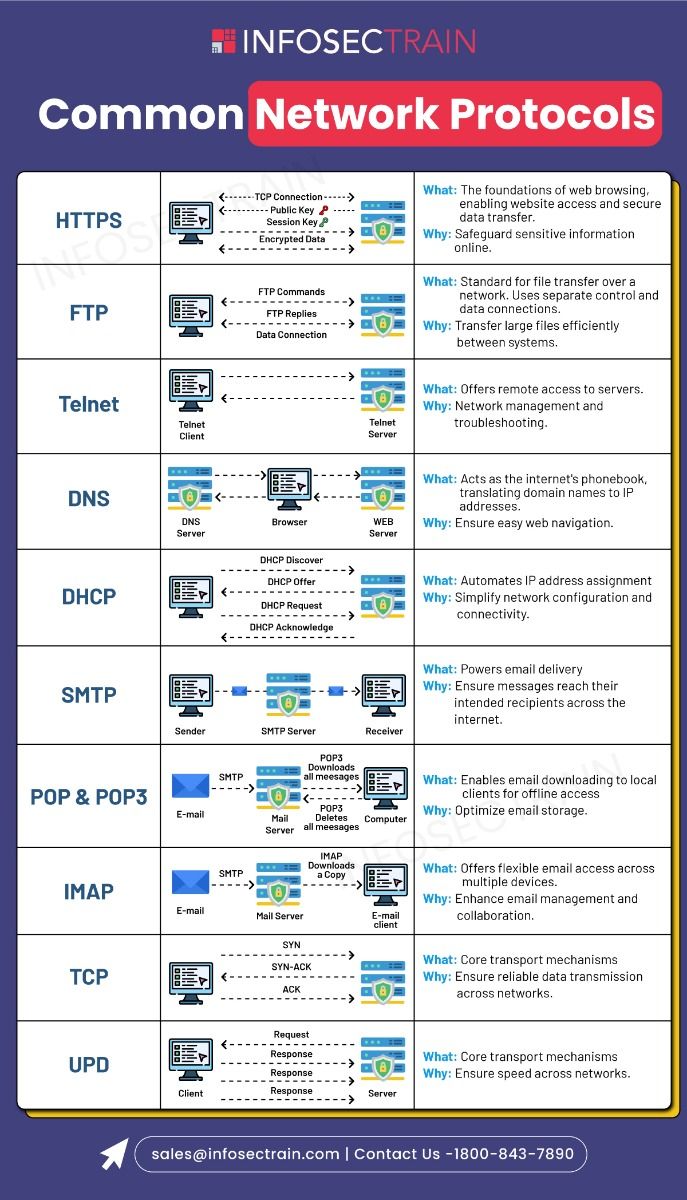
This article serves as a guide to some of the most common network protocols you'll encounter.

SFP10G QSFP28 QSFP+ 40G 100G 200G DAC AOC Transceiver modules Datacenter 5G FTTH FTTX FTTA

The error message arrives when you click on the diagnose button and the result will show one or more network protocols are missing on this computer

Explaining 8 Popular Network Protocols in 1 Diagram.

If you recieve One or more Network Protocols are missing on this computer error on WIndows 11/10, then this troubleshooting guide will help you fix issue.

I will assist in networking design and cisco packet tracer projects - Support & IT. Click on the link for see the service on Fiverr.

RF Isolation is a global leader in manufacturing customizable RF-Shielded enclosures in Ahmedabad, India such as RF Shield Boxes, RF Chambers, Test Racks, etc.

الساحة الرقمية العربية | Digital Aarena ما هي العملة الرقمية ALT/ Alitas مشروعها و معلومات عنها | مشاريع العملات الرقميه

In this Cisco Configuration Example, we will do Switch Virtual Interface Configuration (SVI Configuration) on Cisco Packet Tracer.

Explore common network ports and protocols, their secure alternatives, and the importance of IP protocol types. Enhance network security and optimize communication.

In this Route Redistribution lesson, we will learn to Redistribute OSPF into EIGRP and to Redistribute EIGRP into OSPF.

** Learn Updated CCNA 200-301 Labs With eXcellenT Cisco Router and Switch Configurations..! **

network

The role of ICMP (Internet Control Message Protocol) is generate error packets about the network devices for troubleshooting activities.

Cisco SD-WAN Components In Cisco SD-WAN Architecture, there are main components work on different SD-WAN Architecture Planes. These SD WAN Components and

Rapid Spanning Tree Protocol (RSTP) is the second STP type. It is a fast converged version of Spanning Tree Protocol as its name implies. RSTP bypass the

TCPIP Model is a Referance Model in the Network World. There are Four TCPIP Layers and Five TCP Layers in TCP Five Layered Model.

🚀 Understanding Network Protocols: HTTP, HTTP/3, HTTPS, WebSocket, TCP, UDP, SMTP, and FTP 🌐 In today’s digital world, network protocols power our communication, ensuring seamless data exchange across the internet. Let’s break down some key protocols and their use cases! 🌍 Application Layer Protocols 🔹 HTTP (Hypertext Transfer Protocol) – The foundation of web communication, enabling browsers to fetch and display websites. 📌 Use case: Accessing web pages and APIs. 🔹 HTTP/3 – The latest HTTP version using QUIC instead of TCP, improving speed and security. 📌 Use case: Faster and more reliable website loading, especially on mobile networks. 🔹 HTTPS (Secure HTTP) – HTTP with SSL/TLS encryption for secure communication. 📌 Use case: Secure banking, e-commerce, and data-sensitive transactions. 🔹 WebSocket – A full-duplex communication protocol for real-time data exchange. 📌 Use case: Live chat applications, stock market updates, online gaming. 🔹 SMTP (Simple Mail Transfer Protocol) – The standard for sending emails. 📌 Use case: Email transmission between mail servers. 🔹 FTP (File Transfer Protocol) – Used to transfer files between clients and servers. 📌 Use case: Uploading and downloading large files from web servers. 🔗 Transport Layer Protocols 🔹 TCP (Transmission Control Protocol) – A connection-oriented protocol ensuring reliable data delivery. 📌 Use case: Web browsing, emails, file transfers, and streaming services. 🔹 UDP (User Datagram Protocol) – A connectionless protocol that prioritizes speed over reliability. 📌 Use case: Online gaming, VoIP calls, live video streaming. Each of these protocols plays a crucial role in shaping the internet as we know it. Understanding them helps us build faster, more secure, and scalable applications! 💬 Which of these protocols do you use most often in your projects? Let’s discuss in the comments! 👇 #Networking #Cybersecurity #WebDevelopment #CloudComputing #NetworkProtocols #Tech Logos and trademarks are the properties of their respective owners. | 12 comments on LinkedIn
