

Artificial neural network - Download as a PDF or view online for free

Artificial neural networks (ANNs), usually simply called neural networks (NNs), are computing systems vaguely inspired by the biological neural networks.

Learn how to implement an ANN from scratch with NumPy (feedforward and backpropagation).


https://irjet.net/archives/V5/i12/IRJET-V5I12261.pdf

Artificial Neural Network (ANN) - Introduction

Neural networks have received a lot of hype in recent years, and for good reason. With a basic understanding of this deep learning theory...

Pubrica Academy overview on artificial neural network in medical diagnosis for diseases such as cancer diabetes cardiovascular diseases

Knowledge of surface reflection of an object is essential in many technological fields, including graphics and cultural heritage. Compared to direct multi- or hyper-spectral capturing approaches, commercial RGB cameras allow for a high resolution and fast acquisition, so the idea of mapping this information into a reflectance spectrum (RS) is promising. This study compared two modelling approaches based on a training set of RGB-reflectance pairs, one implementing artificial neural networks (ANN) and the other one using multivariate polynomial approximation (PA). The effect of various parameters was investigated: the ANN learning algorithm—standard backpropagation (BP) or Levenberg-Marquardt (LM), the number of hidden layers (HLs) and neurons, the degree of multivariate polynomials in PA, the number of inputs, and the training set size on both models. In the two-layer ANN with significantly fewer inputs than outputs, a better MSE performance was found where the number of neurons in the first HL was smaller than in the second one. For ANNs with one and two HLs with the same number of neurons in the first layer, the RS reconstruction performance depends on the choice of BP or LM learning algorithm. RS reconstruction methods based on ANN and PA are comparable, but the ANN models’ better fine-tuning capabilities enable, under realistic constraints, finding ANNs that outperform PA models. A profiling approach was proposed to determine the initial number of neurons in HLs—the search centre of ANN models for different training set sizes.

(Phys.org)—A pair of physicists with ETH Zurich has developed a way to use an artificial neural network to characterize the wave function of a quantum many-body system. In their paper published in the journal Science, Giuseppe Carleo and Matthias Troyer describe how they coaxed a neural network to simulate some aspects of a quantum many-body system. Michael Hush with the University of New South Wales offers a Perspectives piece on the work done by the pair in the same journal issue and also outlines the problems other researchers have faced when attempting to solve the same problem.

1 Introduction Credit risk or credit default indicates the probability of non-repayment of bank financial services that have been given to the customers. Credit risk has always been an extensively studied area in bank lending decisions. Credit risk plays a crucial role for banks and financial institutions, especially for commercial banks and it is always… Read More »Credit Risk Prediction Using Artificial Neural Network Algorithm

This article explains artificial neural networks and fundamentals of deep learning. Learn about forward and backward propagation.

Facebookは、機械学習を使用して、歪んだ360°画像を識別し向きを自動的に変更(最適化)する技術を発表しました。360°画像において、撮影時にカメラが水平を保たれず、その結果、歪んだ水平線が表現される場合があります。

Researchers have shown that it is possible to train artificial neural networks directly on an optical chip. The significant breakthrough demonstrates that an optical circuit can perform a critical function of an electronics-based artificial neural network and could lead to less expensive, faster and more energy efficient ways to perform complex tasks such as speech or image recognition.

In this guide, we will be looking at how to run an artificial neural network on an Arduino to learn about machine learning and artificial intelligence

The major breakthrough in Artificial intelligence started with the development of Artificial Neural Networks (ANNs). The native machine learning algorithms
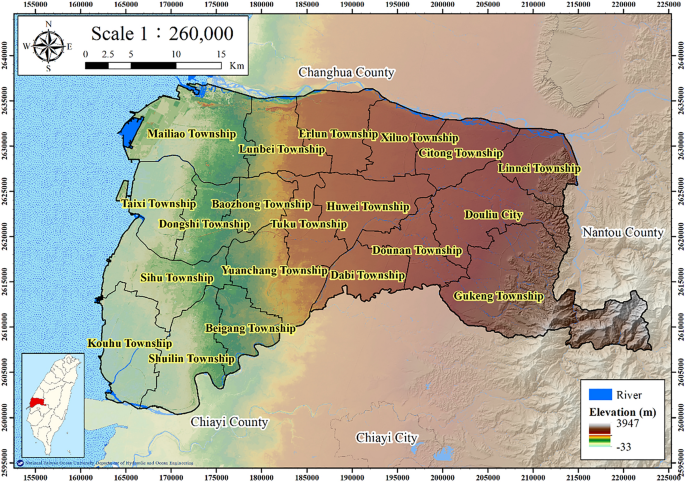
In this study, the land subsidence in Yunlin County, Taiwan, was modeled using an artificial neural network (ANN). Maps of the fine-grained soil percentage, average maximum drainage path length, agricultural land use percentage, electricity consumption of wells, and accumulated land subsidence depth were produced through geographic information system spatial analysis for 5607 cells in the study area. An ANN model based on a backpropagation neural network was developed to predict the accumulated land subsidence depth. A comparison of the model predictions with ground-truth leveling survey data indicated that the developed model had high accuracy. Moreover, the developed model was used to investigate the relationship of electricity consumption reduction with reductions in the total area of land with severe subsidence (> 4 cm per year); the relationship was approximately linear. In particular, the optimal results were obtained when decreasing the electricity consumption from 80 to 70% of the current value, with the area of severe land subsidence decreasing by 13.66%.

Get a 20.000 second Neural Network Abstract Video Background stock footage at 24fps. 4K and HD video ready for any NLE immediately. Choose from a wide range of similar scenes. Video clip id 1059078899. Download footage now!

This tutorial builds artificial neural network in Python using NumPy from scratch in order to do an image classification application for the Fruits360 dataset

🔥 AI & Deep Learning with TensorFlow (Use Code "𝐘𝐎𝐔𝐓𝐔𝐁𝐄𝟐𝟎"): https://www.edureka.co/ai-deep-learning-with-tensorflowThis Edureka Deep Learning Full...
