

Description: "In Simla. The shopping centre." Photograph taken by Cecil Beaton for the Ministry of Information. Date: 1944 Our Catalogue Reference: INF 14/445/3 This image is from the collections of The National Archives. Feel free to share it within the spirit of the Commons. For high quality reproductions of any item from our collection please contact our image library.

Baluchi

Mumbai is one of the oldest cities in India. Being the capital of Indian state Maharashtra, it is the fifth most populous city in the world. You could

These 28 rare photos are of India in the 1900s. They encompass the beauty and diversity of India, and bring alive its spirit.

View auction details, art exhibitions and online catalogues; bid, buy and collect contemporary, impressionist or modern art, old masters, jewellery, wine, watches, prints, rugs and books at sotheby's auction house

The Brave Shall Inherit the Earth

Pakistan. Lahore. 1947.


MALAYSIAN MATCHLOCK MUSKET FOR COMMENT Ethnographic Weapons

The first half of the 19th-century was a tipping point for British imperial presence in the Indian subcontinent. No longer preoccupied with the chase of conquest, the focus had moved to colonial rule. This led to the opportunity for increased geographical and cultural exploration, and with it scope for understanding the diverse landscapes, languages, buildings…

In the 16th century, men and women from the Indian subcontinent crossed the Pacific on ships that brought commodities from Asia to colonial Mexico. Little trace remains of the presence of the South Asians who arrived in Mexico during this period except for one woman whose legend lives on even today.

Who dare say they know India?
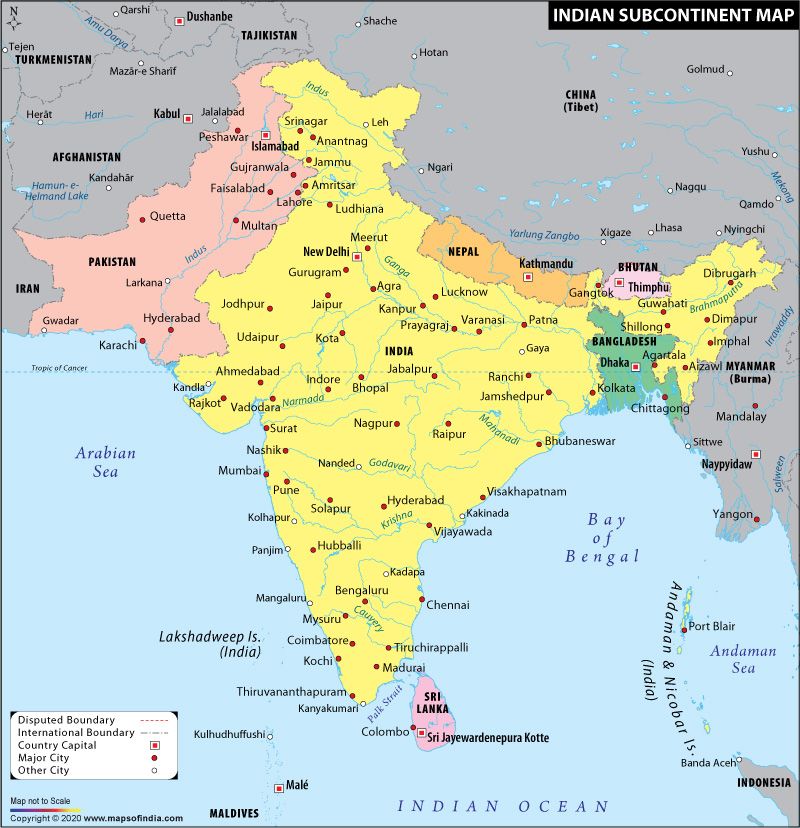
Indian subcontinent Map- History of Indian subcontinent includes all of India, as well as Bangladesh, Bhutan, Nepal, Sri Lanka and Pakistan.

The siege of Malakand was the 26 July – 2 August 1897 siege of the British garrison in the Malakand region of colonial British India's North West Frontier Province. The British faced a force of Pashtun tribesmen whose tribal lands had been bisected by the Durand Line, the 1,519 mile (2,445 km) border between Afghanistan and British India drawn up at the end of the Anglo-Afghan wars to help hold back what the British feared to be the Russian Empire's spread of influence towards the Indian subcontinent.

The Mughal Empire existed for more than 300 years, from the early 1500s until the arrival of British colonial rule in 1857, encompassing territory that included vast portions of the Indian subcontinent and Afghanistan. The Mughal rulers were Central Asian Muslims who assimilated many religious faiths under their administration. Famed for its distinctive architecture, including the Taj Mahal, the Mughal Empire is also renowned for its colorful and engaging paintings.


A collection of over 750 Indian matchboxes.

This hub is about the changes and facts about the Indian subcontinent during the last Ice Age which spanned from around 20000 BC to its peak and subsequent decline around 8000 BC.


